Human Behaviour Architecture
You make perfect sense.
Your behaviour isn't random. It is architecture.
- There is a reason you think the way you think.
- A reason you feel what you feel.
- A reason you do what you do.
A different way of understanding human behaviour, change and personal growth.
The idea in one sentence
Nobody is broken. Every behaviour, also the behaviour someone wants to get rid of, once solved a problem for that person.
The nervous system learned from experience what to expect, and it keeps acting on those predictions. So the first question is never “what is wrong with me?” but “why does this make perfect sense?”
You have probably spent years trying to change the behaviour.
- Trying to become more disciplined.
- Stop overthinking.
- Be more confident.
- Set better boundaries.
- Stop procrastinating.
- Control your emotions.
- Become more productive.
- Perform at a higher level.
And when it doesn't work, the conclusion is usually:
“Something is wrong with me.”
But what if that's the wrong starting point?
What if your behaviour makes sense?
Not as an excuse.
But as information.
Your behaviour is telling you something about the system that produced it.
Your behaviour has an architecture.
You cannot understand why someone does something by looking only at the behaviour.
You have to understand what is underneath it.
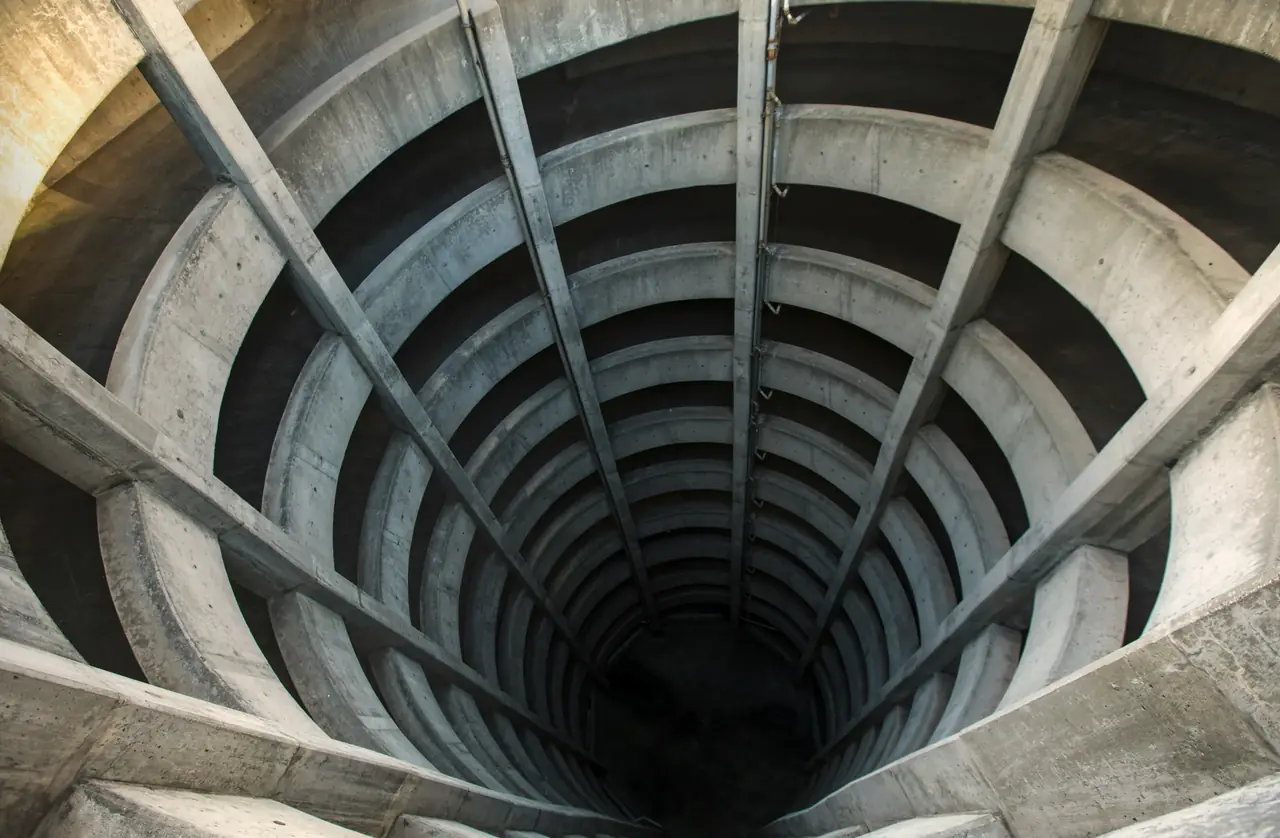

- IdentityWho you believe you are
- Nervous SystemHow you feel and detect threat
- PredictionWhat you expect will happen
- AdaptationHow you learn to protect yourself
- PatternsWhat keeps happening
- BehaviourWhat you do in the world
Identity is built last, and then it works first.
Behaviour is the visible layer.
Architecture is everything underneath it.
If behaviour is the visible layer, change cannot begin with behaviour alone.

Why change is so difficult.
You don't simply choose your behaviour.
- You inherit patterns.
- Your nervous system learns.
- Your brain predicts.
- Your identity organises experience.
- Your environment reinforces certain adaptations.
And eventually, something that once protected you can become something that limits you.
The behaviour remains.
The original reason disappears from conscious awareness.
You may have spent years asking:
“Why do I keep doing this?”
But a more useful question might be:
“What has my system learned that makes this behaviour make sense?”
Your behaviour makes sense.
The question is not whether it makes sense.
The question is why.

You might recognise yourself here.
- You know what you should do, but somehow don't do it.
- You understand something intellectually, but still react differently.
- You perform exceptionally well, but it costs you more than people realise.
- You keep repeating patterns you thought you had already solved.
- You can explain yourself perfectly, but you still don't understand yourself.
You don't need more information.
You need to understand the architecture.
What if you don't need to become someone else?
Maybe the problem was never that you needed to become more disciplined. Or more confident. Or less emotional. Or better at controlling yourself.
Maybe you first need to understand why your system works the way it does.
Because when you understand the architecture behind your behaviour, change becomes something different. Not forcing yourself to behave differently. But learning how to work with the system that is already there.
Understanding creates possibility.
You can begin to see what can change. And what it will take to change it.

Cover coming soon
The book
You Make Perfect Sense
Why do you keep doing the thing you promised yourself you would stop? Not because you are lazy or broken. Your behaviour is the last step of something that started much earlier. This book shows you the architecture underneath it, so you can finally see why you do what you do, and what you can do with that.
December 2026, in English and Dutch. Paperback and Kindle on the same day.
Paperback €19.99 · Kindle €9.99
The order buttons go live on launch day.
Store links follow on launch day.
The model
Three pictures of one model.
How an architecture was built, how it runs today, and what it looks like from the inside out.
01
How an architecture was built
- 1Experience
- 2Adaptation
- 3Repetition
- 4Prediction
- 5Pattern
- 6Identity
- 7Behaviour
02
The Prediction Loop
How it runs today
- 1Experience
- 2Nervous System Learns
- 3Prediction
- 4Response
- 5Behaviour
- 6Outcome
- 7Perceived Evidence
- 8Prediction Updated
03
The Layers
A snapshot, from the inside out
Identity is built last, and then it works first.
Understand the system, update the prediction, expand your freedom.
Explore the model
The writer
“I know that conclusion very well, because for years it was mine. As a competitive sportsman I always demanded more from myself. More, better, and if possible, perfect.”
Sjoerd Joosten is the founder and writer of You Make Perfect Sense and the creator of the Human Behaviour Architecture Model.
About Sjoerd
You Make Perfect Sense
The book. December 2026, in English and Dutch.
Leave your name and email, and you hear from me the day the book is live.